
INNER WEST SYDNEY
Roof repairs and replacements for warehouses, factories, shops, offices and strata buildings across the Inner West. We photograph the roof's condition first, so you have a clear record of what needs doing.
Commercial roofing
A commercial roof is a different job from a house roof. It’s usually bigger and flatter, and there’s more at stake underneath: stock, equipment, tenants and customers. The decision to fix it often sits with an owner, a property manager or a strata committee who has to explain the cost to someone else.
Alongside our residential work, we repair and replace roofs on commercial buildings, and we’ve completed several warehouse roofing projects. Tell us the type of building, what the roof is made of and what’s happening, and we’ll come and assess it.
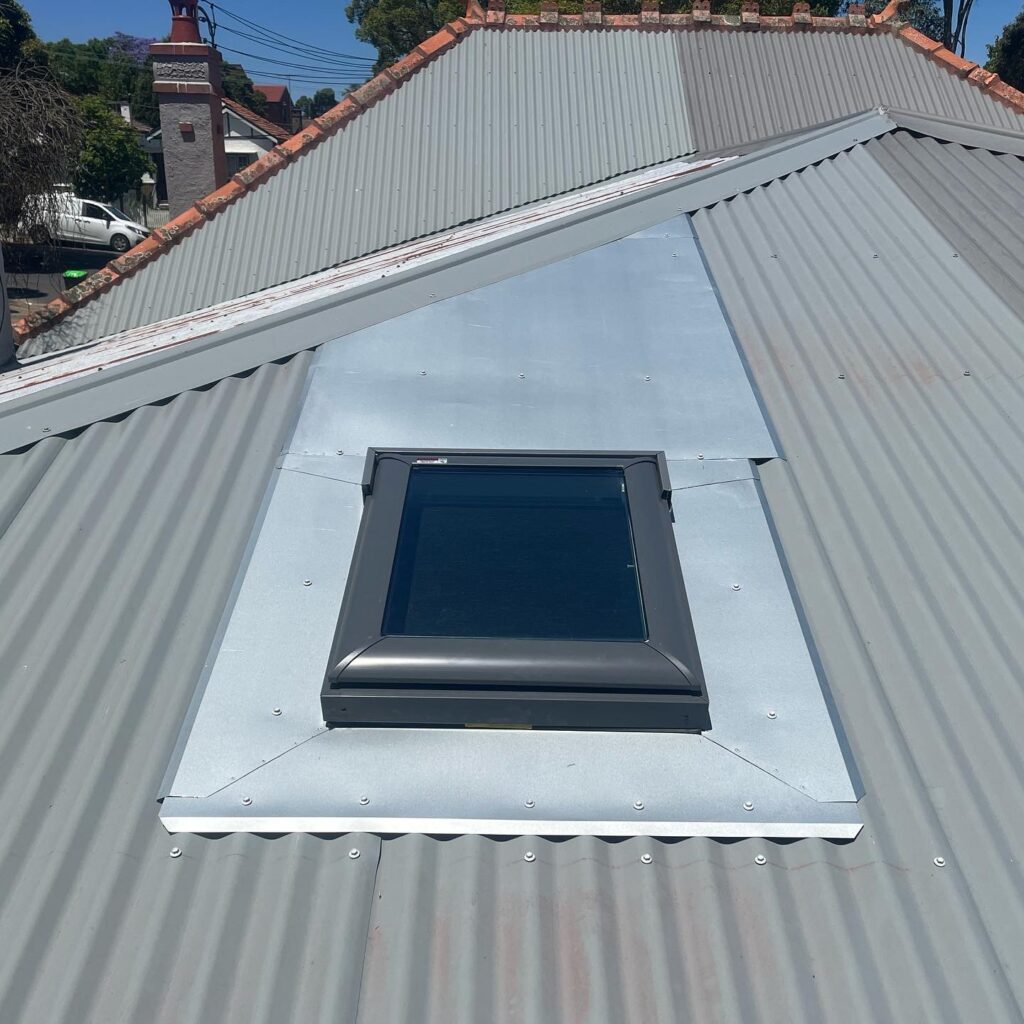
Building types
Each kind of commercial building brings its own roof problems.
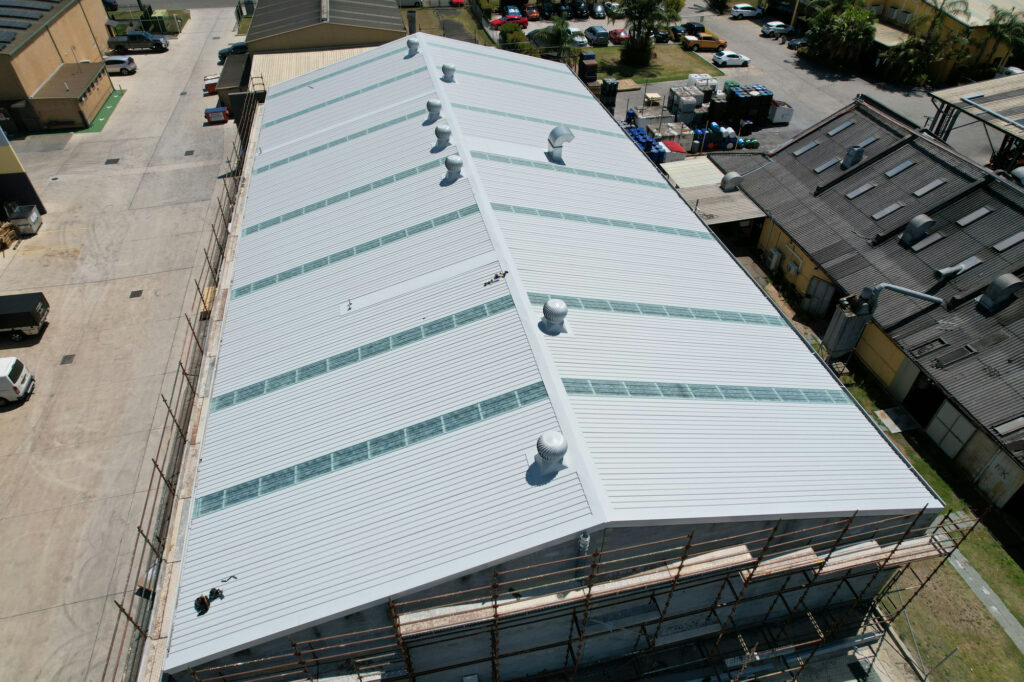
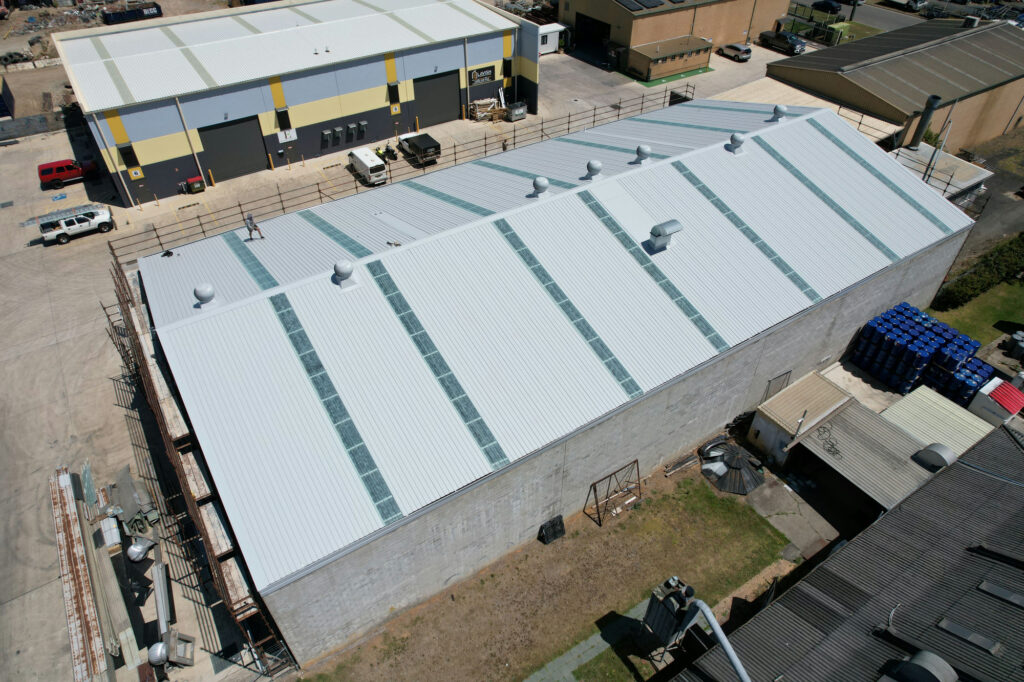
Most have a metal roof over a steel frame, often with rows of translucent sheeting for daylight and ventilators along the ridge. Over time the fixings loosen or rust, the laps between sheets start to leak, and the translucent sheets go brittle and crack.
Roof work on a trading business has to be planned around customers and staff, with access, noise and timing agreed with the tenant before anyone goes up.
Apartment blocks and mixed-use buildings run on committee decisions and quotes, which the strata section below covers.
Data rooms, cold storage and fit-outs full of sensitive equipment can’t take a drip. On these buildings, the priority is finding the entry point quickly and protecting what’s underneath while the repair is organised.
Metal roofing
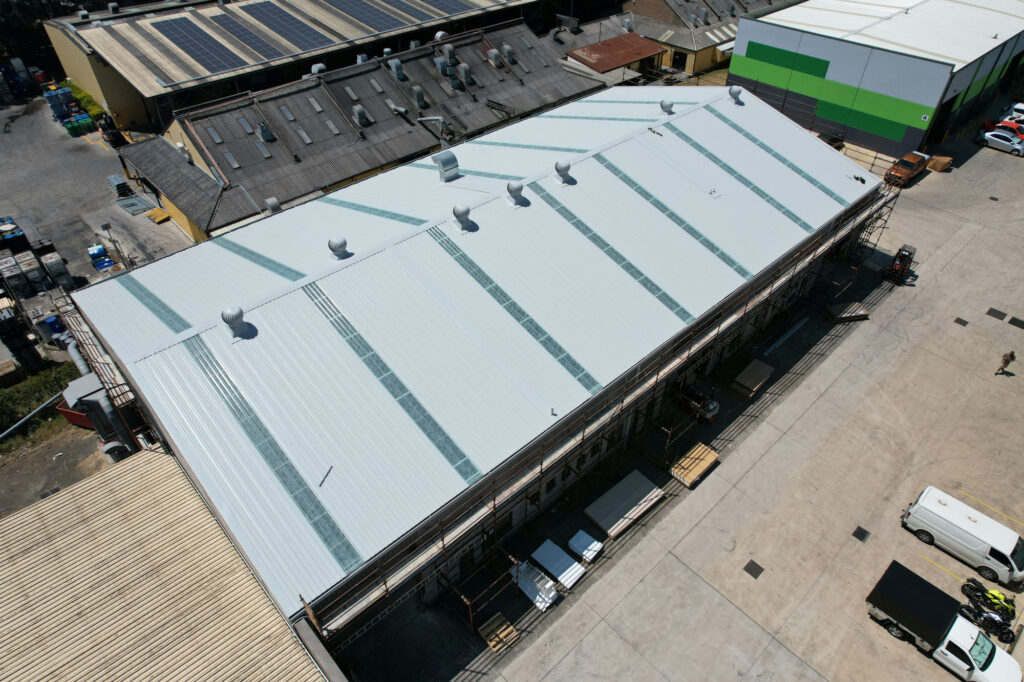
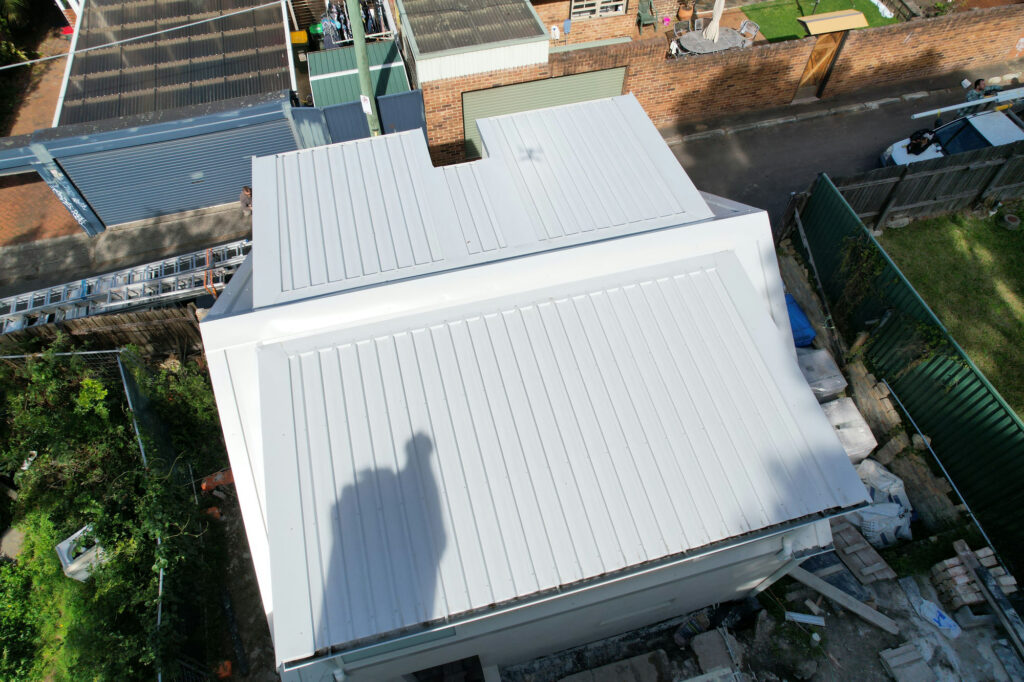
Most commercial roofs are metal, and most are much flatter than a house roof.
That low pitch changes which roofing works. Lysaght rates its concealed-fix Klip-Lok sheeting for roof slopes as low as 1 degree, where its standard corrugated profile needs at least 5. On a roof that flat, water drains slowly, so the laps, fixings and flashings are tested hard in every storm.
Long sheet runs also expand and contract with the heat, which works fixings loose over the years. Translucent roof sheets fade and crack in the sun, and a cracked sheet lets in water as readily as a rusted one. Many problems can be fixed where they are, by replacing fixings, resealing laps and flashings, or swapping out damaged translucent sheets. When corrosion has spread across the roof, re-sheeting is the longer-term fix.
Why warehouse roofs leak in heavy rain
On big commercial roofs, the water often ends up in box gutters that run through the roof and drain into sumps or rainwater heads. When an outlet is blocked or the gutter is too small for the area draining into it, the water backs up over the edge and into the building. Box gutters are designed to their own standard, AS/NZS 3500.3, and they need an overflow that sends water outside when the outlet can’t keep up.
Safety and compliance
Commercial roof work comes with rules that protect the people on the roof and the people below it.
SafeWork NSW classes any construction work with a risk of falling more than 2 metres as high-risk construction work, and that work needs a safe work method statement (SWMS) setting out how the risks will be controlled. On most commercial roofs that means edge protection around the perimeter before work starts.
SafeWork NSW also warns that skylights and plastic roof sheeting may look solid but often can’t hold a person’s weight, so they have to be treated as fall hazards, with covers or crawl boards where people work near them. On a warehouse with rows of translucent sheets, those covers go into the job plan from the start.
Asbestos is the other check. Under SafeWork NSW rules, a workplace built before 31 December 2003 must keep an asbestos register, held by whoever manages or controls the building. Older factory roofs can be asbestos cement sheeting, and removing more than 10 square metres of bonded asbestos needs a licensed removalist, so ask for the register before any roof work is quoted.
Strata buildings
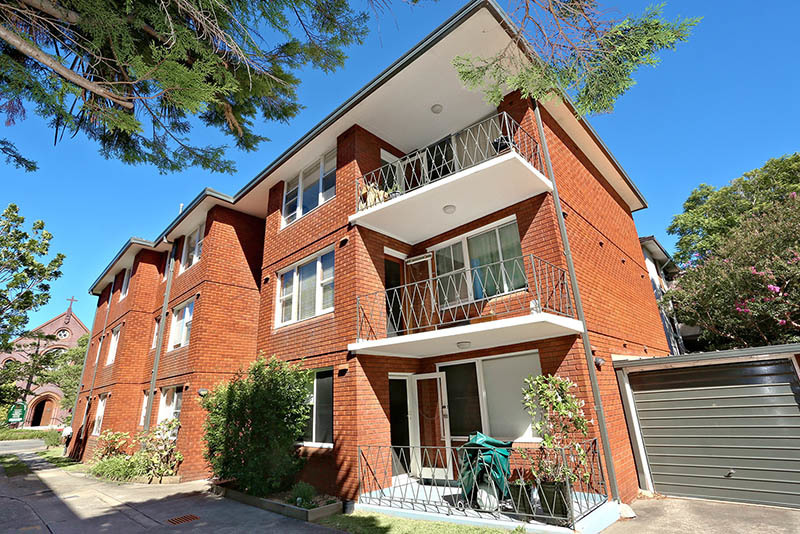
In a strata building, the roof usually belongs to everyone.
NSW strata guidance puts the roof and gutters on the owners corporation’s list of responsibilities: the owners corporation or strata committee must repair and maintain common property. All strata schemes, whatever their size, must get at least two independent quotes for any work valued at $30,000 or more. The exceptions are emergency repairs, including serious damage caused by a storm.
The owners corporation must also make a 10-year capital works plan, which predicts the major repairs the building will need and forecasts their cost, paid for from the capital works fund (the sinking fund). A roof nearing the end of its life belongs in that plan well before it starts leaking.
A photo record helps at both stages. When we assess a strata roof, we photograph the problems we find, so the committee can compare quotes against the same evidence, put a realistic roof item into the 10-year plan and show owners why the work is needed.
Rain is louder on steel than on tiles. An insulation blanket laid under the sheets deadens the noise and helps control condensation on the underside of the roof. Check whether your quote includes one.
Some older houses and outbuildings have corrugated fibro roofs, which can contain asbestos. SafeWork NSW allows bonded asbestos to be removed without a licence only where it doesn’t exceed 10 square metres in total, and a house roof is far larger than that. An asbestos cement roof has to come off with a licensed asbestos removalist before the new roof goes on. If you think your roof is fibro, tell us when you call.
Often, yes. A separate roof section, such as a rear skillion or the roof over an extension, can usually be replaced on its own. Where the new roof meets the old one, the join needs proper flashing, and we look at that when we quote.


