
INNER WEST SYDNEY
We find where the water is getting in and photograph it, so you can see the problem before we repair it. Tiled and metal roofs, including Colorbond.
Leak repairs
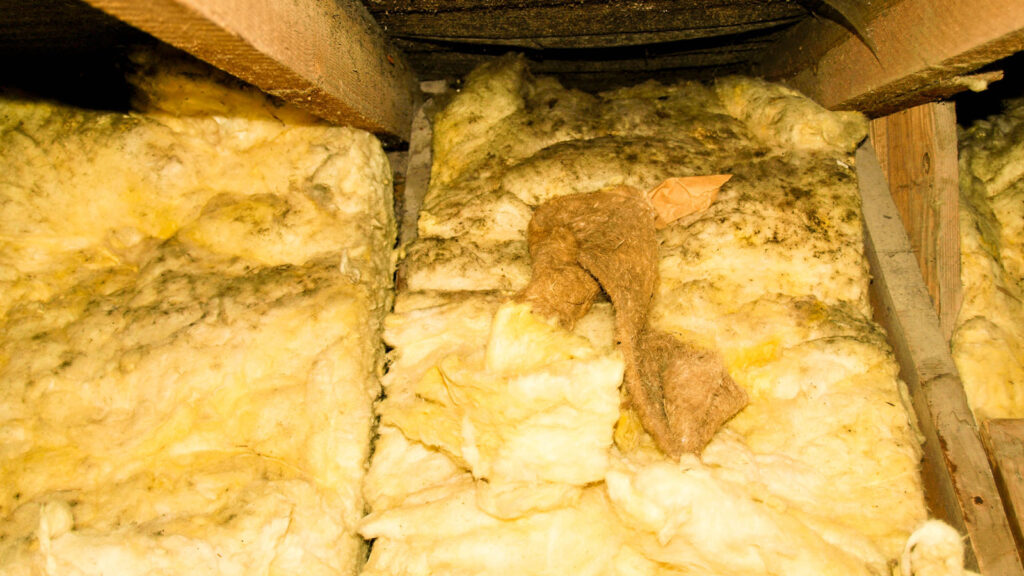
Most roof leaks do their damage out of sight first, in the insulation and the ceiling plaster, well before a drip shows up in a room. By the time a stain appears, water has often been getting in for some time.
We repair leaks in terracotta and concrete tile roofs and in metal roofs, including Colorbond, across Sydney’s Inner West. Tell us what you’re seeing and where, and we’ll come out and find the source.
Common Causes
The place water shows up inside is rarely where it gets in. It runs along battens, rafters and sarking first, sometimes a long way. Where we check first depends on the roof.
On terracotta and concrete tile roofs, the usual starting points are cracked or slipped tiles and the ridge. Ridge caps sit on a bed of mortar sealed with pointing, and once that pointing cracks, wind-driven rain gets in underneath.
Valleys are the other common spot. A valley iron carries water off two roof faces at once, so when leaves and silt build up in it, the water backs up and spills over the sides onto the timber below. On older roofs the valley iron itself can rust through. Cracked and broken tiles are covered in more detail on our roof tile repairs page.
Metal roofs leak in different places. Each roofing screw has a rubber washer that hardens and splits after years in the sun, and a screw that has worked loose lets water run down into the roof. Where two sheets overlap, water can creep in on low-pitched roofs, or where the overlap was laid facing into the weather.
Rust is the other big cause, and it often starts with something draining onto the roof. BlueScope, the maker of Colorbond and Zincalume steel, advises that water must not drain onto these roofs from copper. A copper pipe or fitting above the roof line, or an old lead flashing left in place, can start rust in one patch of an otherwise sound roof. Once rust has holed a sheet, sealant won’t hold for long and the sheet needs replacing.
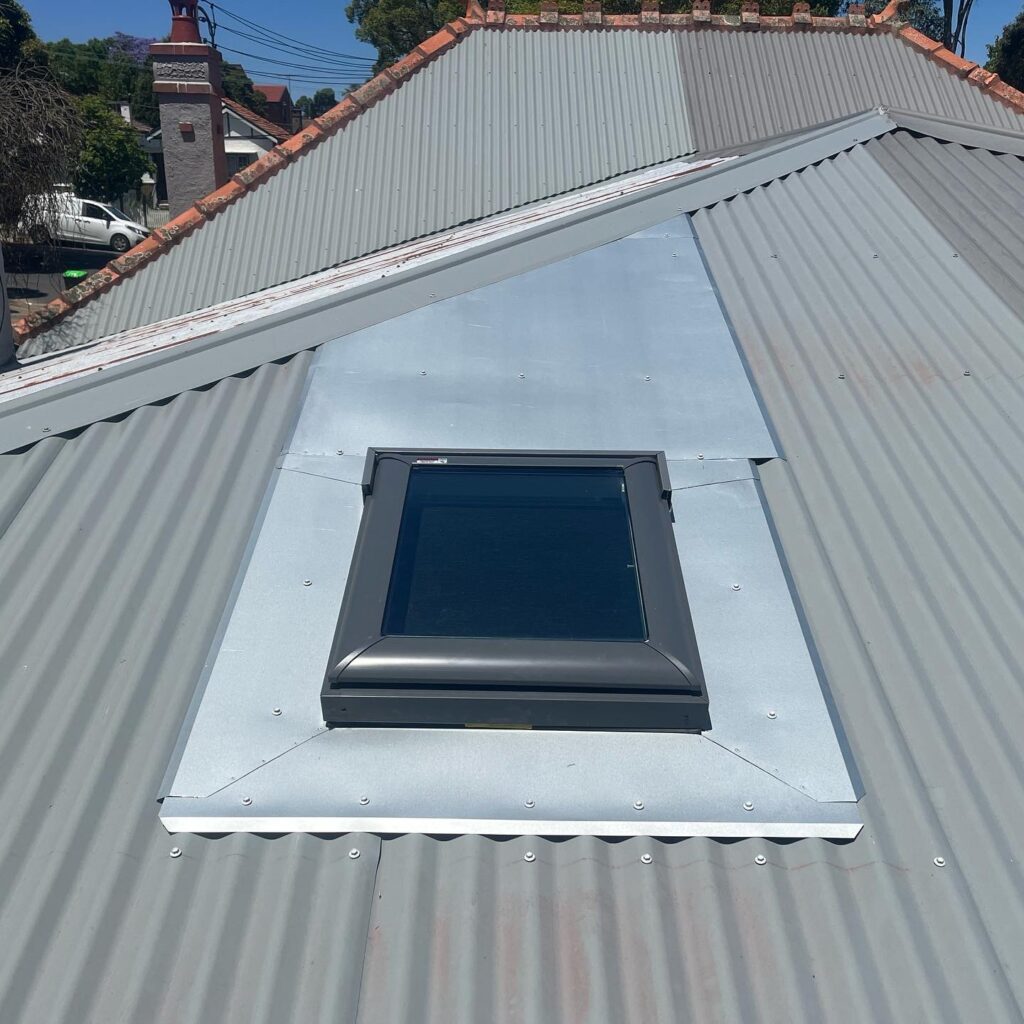
Anywhere the roof meets something else is a likely entry point: chimneys, parapet walls, vent pipes, solar panel mounts and skylights. Flashings lift over time, and the sealant or mortar holding them against brickwork cracks away.
Terrace houses often have a parapet wall with a box gutter behind it. A box gutter sits inside the line of the walls, so when it blocks, the overflow runs into the ceiling below. If the water is coming from around a skylight or from the gutters, our skylight installation and gutters and downpipes pages cover those jobs.

Warning signs
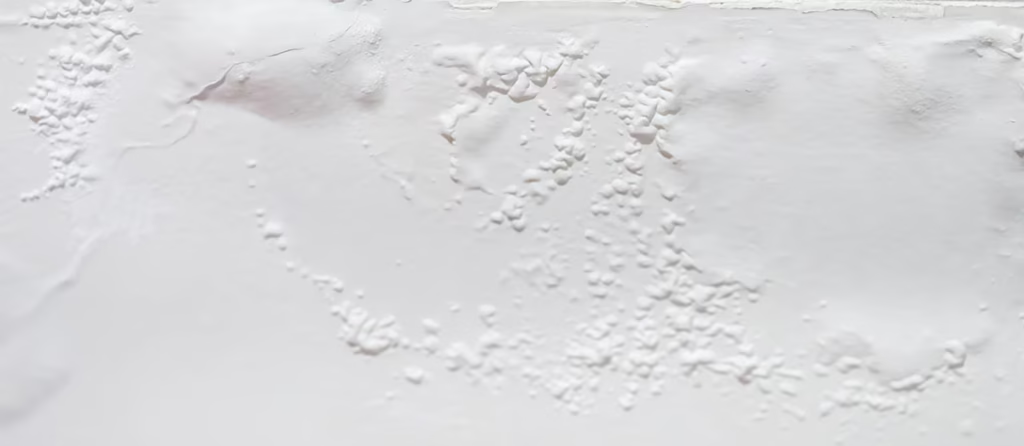
Some leaks drip into a room the first time it rains. Others show up slowly, as changes you notice over a few weeks:
If water is coming in now, put a bucket under it and move anything valuable out of the way. If the water is near a light, ceiling fan or power point, switch that circuit off at the switchboard. A ceiling that is sagging with water can come down, so keep people out from under it.
Please don’t climb onto the roof yourself, least of all while it’s wet. Take photos of the stain instead, and note when it appears: during heavy rain, only when the wind comes from one direction, or a day or two after the rain has stopped. That pattern tells us a lot about where to look.
Local leak repairs

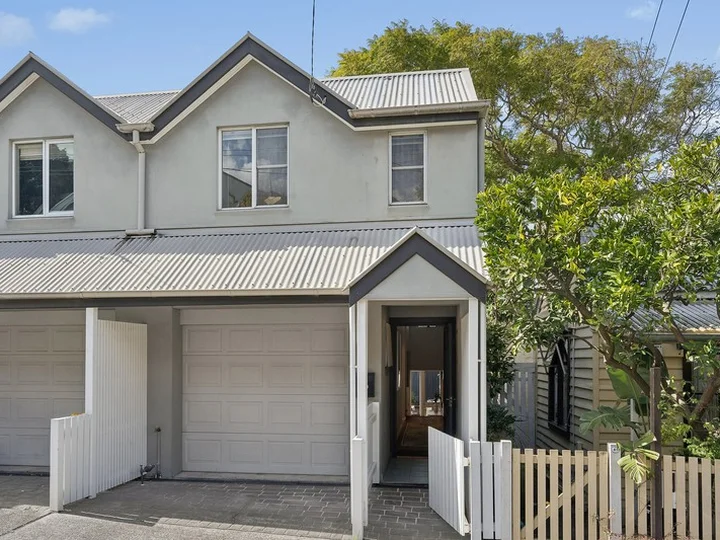
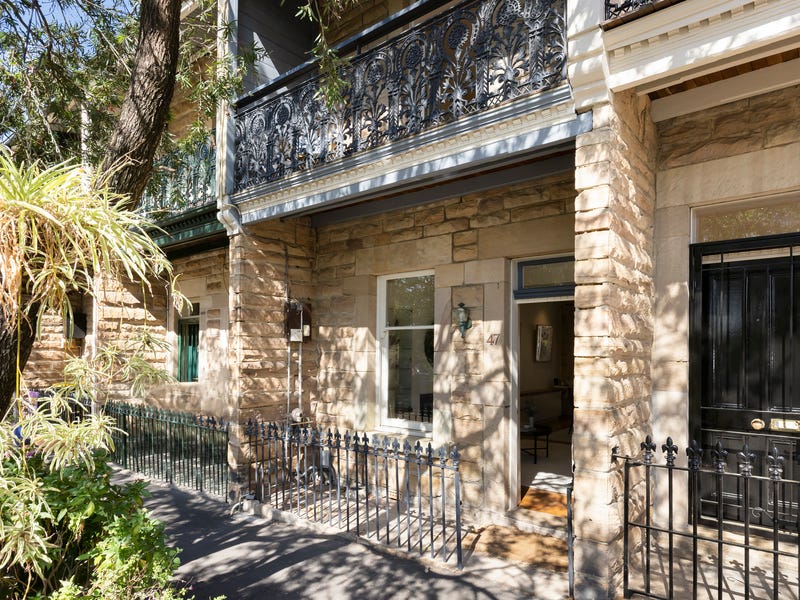
We repair roof leaks in Birchgrove, Balmain and Rozelle on the Balmain peninsula, and across the water in Drummoyne and Abbotsford. The houses in these suburbs raise a few issues of their own on a leak job.
The streets of Birchgrove, Balmain and Rozelle are lined with Victorian terraces and narrow workers’ cottages. On attached terraces, the parapet wall and box gutter are often shared with the house next door, so a leak that shows in your ceiling can start on your neighbour’s side of the wall. Many of these houses also have no side access, which changes how the roof is reached.
If your home is in one of Inner West Council’s heritage conservation areas, replacing damaged roofing with like material can qualify for a Heritage Exemption Certificate instead of a development application. Council asks owners to contact its Duty Planning Service before any work starts to check whether consent is needed. For that exemption, replacement tiles or iron have to match what is already on the roof.
Drummoyne and Abbotsford sit in the City of Canada Bay, which has its own heritage conservation areas, so that is the council to check with there. Water surrounds Drummoyne on three sides, and roofs facing open water cop the full force of wind-driven rain. A leak on one of these houses can show up only in storms from one direction, on the side of the roof that faces the river.
Silicone can stop water for a while, but it rarely lasts on a roof. It breaks down in UV and doesn’t bond well to dusty tiles or old mortar. A bead in the wrong place can also trap water and send it somewhere new, which hides the real cause. The bigger risk is falling: tiles are brittle underfoot, and metal roofs are slippery when wet or dewy. While you wait for a roofer, a bucket inside is the safer option.
Most leaks can be repaired. Replacement starts to make sense when the problem is spread across the whole roof, such as rust coming through on many metal sheets or tiles cracking all over. New leaks turning up in a different place each wet season point the same way. If we think a repair would only buy a short time, we’ll say so and show you the photos. Our roof replacements page explains what a re-roof involves.
That depends on your policy and on what caused the leak. Home insurance commonly covers sudden storm damage, such as tiles broken by hail or roof sheeting lifted by strong wind, and commonly excludes damage from wear and tear or lack of maintenance. Check your product disclosure statement or ask your insurer. The photos we take of the cause can help when you talk to them.
We get to active leaks as quickly as we can, so tell us when you call if water is coming in right now. Roof repairs need a dry roof to be done safely and to last, so during heavy rain the repair is booked in once the roof has dried out.
The pattern usually points to the cause. Wind-driven rain is pushed up under ridge caps, flashings and sheet overlaps on the side of the roof facing the weather, so a leak that only appears in a southerly or an east coast low often sits on that side. If the leak shows only in very heavy rain, a valley or gutter probably can’t carry the water away fast enough. A stain that turns up a day or two after the rain has stopped usually means the water is travelling a long way along the timbers before it drips.


